Welcome to Jiashan County Hardware and Machinery Industry Zone


China has definitely turned into a big sourcing hub for Chemical Mechanical Seals that go into pumps, mixers, compressors, and other rotating equipment. You'll find manufacturers serving everything from water treatment to chemical processing. But here's the thing: a slick website doesn't automatically prove real engineering capability. Buyers still need hard evidence—factory experience, product testing, and steady customer support.
A dependable supplier should be able to walk you through seal-face materials, elastomer options, pressure limits, temperature ranges, and shaft-size tolerances. They should also hand over drawings, inspection records, and practical installation guidance. When you're reviewing suppliers, look closely at machining quality, assembly cleanliness, dynamic balancing, and leakage-test methods. Honestly, the small details matter. A rough face finish can lead to early failure. Pick the wrong elastomer and it might harden after exposure to chemicals or heat.
This guide looks at leading Chinese manufacturers through a few key lenses: technical expertise, production capacity, certifications, customization ability, and after-sales reliability. It asks whether they can handle both standard replacements and tougher engineered applications. Factory audits, sample testing, and reference checks are still worth doing. No shortlist is perfect. Public info can be incomplete, and marketing language can hide limitations. So yeah—verify every recommendation against your actual operating conditions. Before asking for a quote, share the real medium, pressure, speed, temperature, and equipment model. That cuts down on guesswork and helps you make a more reliable choice. The strongest supplier isn't always the biggest one. It's the company that documents its process, communicates clearly, and keeps performance stable over time.
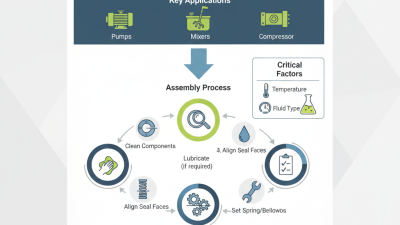
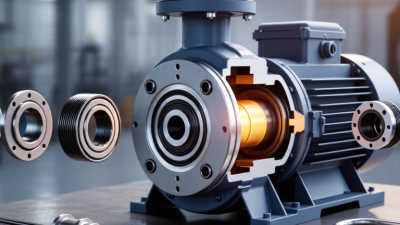
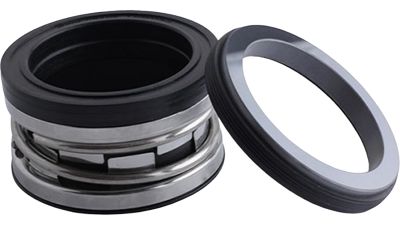
Chemical mechanical seals are engineered barriers that prevent fluid leakage around rotating shafts. They combine stationary and rotating faces, usually pressed together by springs and hydraulic pressure. A thin fluid film separates the faces during operation. This reduces friction while maintaining containment. Unlike packing, a mechanical seal can limit emissions and product loss more effectively.
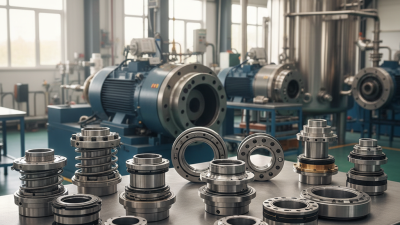
Common types include single, double, cartridge, balanced, and unbalanced seals. Single seals suit many water and chemical transfer duties. Double seals add a barrier fluid for hazardous, abrasive, or crystallizing media. Balanced designs reduce face loading at higher pressures. A Chemical Pump Mechanical Seal must match temperature, pressure, shaft speed, fluid chemistry, and solids content. A small detail matters. Face material, elastomer selection, and spring placement can change service life.
Industrial uses include chemical pumps, mixers, reactors, wastewater equipment, and solvent handling systems. During selection, engineers should inspect shaft runout, chamber dimensions, and flushing arrangements. Clean installation is essential; one fingerprint or scratch may start leakage. China’s chemical mechanical seal manufacturers commonly serve varied process industries, but buyers should verify testing records, material traceability, and technical support. No seal is perfect. A design that looks suitable on paper may fail when crystals form, temperatures cycle, or operators run a pump dry. That risk deserves honest review before installation.
China’s chemical mechanical seal manufacturing landscape is shaped by large process industries, export demand, and stricter reliability expectations. Grand View Research estimated the global Mechanical Seals market at about USD 4.9 billion in 2023, with steady growth through 2030. China remains a major production base, supported by chemical parks, machining capacity, and mature component supply chains. The China Petroleum and Chemical Industry Federation reported petrochemical and chemical industry operating revenue above RMB 15 trillion in 2023. That scale creates continuous demand for Mechanical Seals in pumps, mixers, compressors, and reactors.
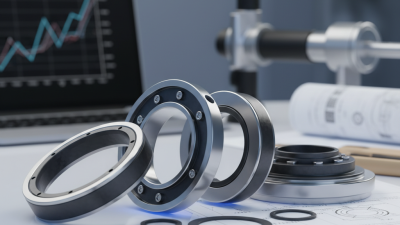
Manufacturers commonly serve corrosive, high-temperature, and solvent-heavy applications. Typical designs combine silicon carbide or tungsten carbide faces with graphite, fluoropolymer, and metal alloy components. In practical inspections, face flatness, spring consistency, elastomer compatibility, and leakage testing matter more than appearance. ISO 21049 and API 682 remain important technical references for process equipment, although chemical plants often require additional site-specific testing. Small details matter. A rough shaft sleeve can damage a seal within weeks.
China’s strongest manufacturing activity is concentrated around coastal industrial regions and established chemical equipment clusters. Export-oriented suppliers increasingly provide material certificates, traceability records, dimensional reports, and test results. MarketsandMarkets identifies chemical processing, oil and gas, and power generation as major mechanical seal application sectors. However, published market estimates differ because suppliers classify products differently. That limitation deserves attention. Buyers should verify pressure cycling, emissions control, dry-running resistance, and after-sales engineering support before comparing price.
| Manufacturing Landscape Dimension | Typical Data or Industry Range | Chemical-Industry Relevance | Common Technical Reference |
|---|---|---|---|
| Primary Product Categories | Component seals, cartridge seals, split seals, bellows seals, mixer seals, and dry-running seals | Supports pumps, agitators, reactors, mixers, compressors, and rotating equipment used in chemical processing | Selection depends on equipment geometry, fluid properties, pressure, speed, and emissions requirements |
| Common Equipment Applications | Centrifugal pumps, positive-displacement pumps, agitators, mixers, reactors, and vertical shafts | Used in transfer, circulation, blending, reaction, crystallization, and solvent-handling operations | Equipment dimensions and operating conditions determine the seal arrangement |
| Typical Shaft Diameter Coverage | Approximately 18–300 mm for standard and engineered designs | Covers laboratory, pilot-scale, general industrial, and large-process equipment | Actual availability varies by seal series, equipment type, and custom engineering capability |
| Typical Pressure Capability | Approximately 0.5–40 bar for common chemical-process seal designs; higher-pressure configurations require specialized engineering | Relevant to low-pressure solvent service, process pumps, high-pressure circulation, and reactor applications | Pressure capability is affected by speed, seal diameter, balance ratio, fluid temperature, and face materials |
| Typical Temperature Capability | Approximately −40°C to 220°C for common material combinations; special metal-bellows and high-temperature designs can exceed this range | Supports chilled chemicals, ambient process fluids, hot oils, solvents, and many thermal-process services | The elastomer or secondary-seal temperature limit may be lower than the primary face-material limit |
| Typical Rotational Speed | Approximately 5–25 m/s surface speed for many pump applications | Determines heat generation, face stability, lubrication requirements, and expected wear rate | Maximum speed must be checked against seal diameter, pressure, fluid lubrication, and balance design |
| Common Seal-Face Materials | Carbon graphite, reaction-bonded silicon carbide, sintered silicon carbide, tungsten carbide, and ceramic | Provides options for abrasive slurries, corrosive chemicals, dry-start risk, and general liquid service | Silicon carbide is commonly selected for chemical resistance and abrasive service; carbon is often used as the mating face |
| Common Secondary-Seal Materials | FKM, EPDM, FFKM, PTFE-based elements, graphite, and metal bellows | Allows compatibility with acids, alkalis, solvents, oxidizers, high-temperature fluids, and specialty chemicals | Compatibility must be confirmed against concentration, temperature, pressure, and exposure duration |
| Metal Component Materials | 304 stainless steel, 316/316L stainless steel, duplex stainless steel, Hastelloy-type alloys, and titanium for specialized service | Material selection affects corrosion resistance, mechanical strength, chloride resistance, and total service life | 316L is widely used for general chemical service; highly corrosive fluids may require higher-alloy materials |
| Seal Arrangement Options | Single seals, tandem seals, double seals, pressurized dual seals, unpressurized dual seals, and gas-lubricated seals | Dual arrangements can reduce fugitive emissions and protect personnel when handling toxic, volatile, or flammable fluids | The barrier or buffer system must be designed together with the seal and process equipment |
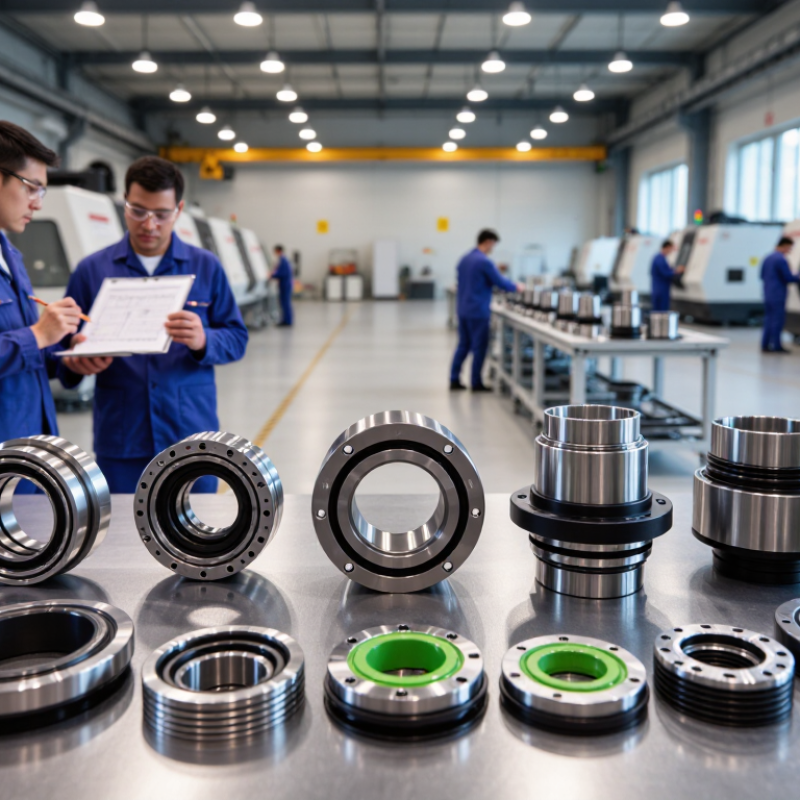
| Manufacturing Process Capabilities | CNC turning, precision grinding, lapping, laser or optical inspection, elastomer molding, balancing, cleaning, and assembly testing | Manufacturing control directly affects face flatness, leakage performance, concentricity, and repeatability | Face finishing and cleanliness are especially important for corrosive, high-purity, and low-emission applications |
| Face-Finish Requirement | Precision lapped faces with flatness commonly controlled at the micrometre level, depending on design and service | Improves sealing stability and limits leakage during start-up and continuous operation | The required finish depends on face material, fluid film, pressure, speed, and seal design |
| Dimensional Standards | Metric and inch seal dimensions are commonly supplied according to equipment and seal-design requirements | Improves interchangeability for replacement seals and simplifies maintenance across installed equipment | EN 12756 and ISO 3069 are widely referenced for mechanical-seal dimensions and installation requirements |
| Petrochemical and Refining Alignment | Engineered seal systems may be designed around API 682 requirements for centrifugal and rotary-shaft equipment | Supports reliability, emissions control, seal plans, documentation, and testing for demanding process applications | API 682 applies primarily to petroleum, petrochemical, and natural-gas industry services |
| Quality-Control Checks | Material verification, dimensional inspection, face-flatness inspection, pressure testing, leakage testing, balancing, and batch traceability | Reduces premature failure and helps maintain consistent performance across replacement orders | The inspection plan should match the criticality of the equipment and the hazard level of the process fluid |
| Customization Scope | Custom shaft sizes, non-standard mounting dimensions, special face combinations, proprietary seal plans, cooling jackets, and high-alloy components | Enables replacement of obsolete seals and adaptation to reactors, mixers, pumps, and non-standard process equipment | A complete dimensional drawing and operating-condition sheet are normally required for accurate customization |
| Typical Export-Readiness Indicators | Technical drawings, material certificates, inspection reports, pressure-test records, packing specifications, and multilingual documentation | Supports international procurement, incoming inspection, maintenance planning, and regulatory documentation | Documentation depth is an important differentiator when comparing manufacturing capability without relying on brand names |
| Key Supplier-Evaluation Criteria | Material compatibility, pressure and temperature margins, face-material expertise, test capability, dimensional repeatability, lead time, and after-sales engineering | Provides a practical basis for comparing chemical mechanical-seal manufacturers by capability rather than company reputation alone | The lowest purchase price should not be used as the sole selection criterion for hazardous or continuous-process service |
China Top Chemical Mechanical Seals Manufacturers?
Key Materials Used in Chinese Mechanical Seal Production
Material selection controls leakage, service life, and maintenance costs in chemical mechanical seals. A 2024 Grand View Research assessment valued the global mechanical seals market at about USD 4.5 billion in 2023. It also projected steady growth through 2030. Chinese manufacturers respond with wider material combinations, especially for pumps handling acids, solvents, and abrasive slurries.
Carbon graphite remains common for its low friction and self-lubricating behavior. Silicon carbide offers strong wear resistance and performs well in corrosive fluids. Tungsten carbide suits heavy-duty applications with suspended particles. However, the hardest face is not automatically the best face. Poor pairing can increase heat and accelerate damage. This detail is often underestimated.
316L stainless steel provides practical corrosion resistance for springs, retainers, and metal components. Duplex steel may serve higher chloride environments. For secondary seals, EPDM, FKM, NBR, and PTFE are selected according to temperature and chemical compatibility. A 2023 MarketsandMarkets industrial sealing report identified chemical processing, water treatment, and energy equipment as major demand areas. These sectors require traceable material certificates and consistent dimensional control.
Small choices matter.
In production, technicians check face flatness, surface finish, spring load, and elastomer hardness. A seal may look perfect under ordinary inspection, yet fail after thermal cycling. More factory testing is needed, especially for mixed-fluid conditions. Material data sheets help, but real operating evidence should decide the final specification.
This chart compares representative densities of widely used mechanical seal materials, including carbon graphite, silicon carbide, tungsten carbide, alumina ceramic, PTFE, and FKM elastomer. The values are typical engineering reference values for material grades and are not company-specific data. Actual formulations and performance can vary by grade, porosity, reinforcement, and operating conditions.
China-Based Chemical Mechanical Seal Manufacturers
China-based chemical mechanical seal manufacturers are gaining attention as process industries demand tighter leakage control, longer service intervals, and flexible production. Grand View Research estimated the global mechanical seals market at approximately USD 4.6 billion in 2023. Its outlook also indicates steady growth through 2030. This demand reflects chemical plants, water treatment facilities, refineries, and pharmaceutical production.
Experienced Chinese manufacturers typically produce Mechanical Face Seals for pumps, mixers, reactors, and rotating equipment. Material selection remains critical. Silicon carbide, tungsten carbide, carbon, and fluoropolymer components suit different temperatures and corrosive fluids. A reliable supplier should provide pressure testing, dimensional inspection, material certificates, and traceable batch records. ISO 21049 and API 682 are useful references for process-pump sealing requirements. Yet compliance claims need verification.
The U.S. Department of Energy reports that pumping systems may represent more than 20% of industrial electricity use. Poor sealing can increase leakage, maintenance, and energy losses. During supplier evaluation, buyers should review pressure limits, speed ratings, face-flatness measurements, and test procedures. Factory audits can reveal practical details, such as clean assembly rooms, calibrated gauges, and spare-part control. A polished catalog is not enough. I would also request failure records, though some manufacturers may share only limited data. That limitation deserves careful consideration. Resistant designs matter most when temperature changes, abrasive particles, or dry-running events occur.
Evaluating Chinese mechanical seal suppliers requires evidence beyond a polished catalog. Grand View Research estimated the global mechanical seals market at about USD 4.8 billion in 2023, with continued growth through 2030. That expansion attracts capable factories and inexperienced traders. Ask whether the supplier manufactures sealing faces, springs, and metal parts in-house. Request recent inspection records, not generic samples.
Check material traceability from billet to finished seal. For Api Mechanical Seals, confirm alignment with API 682 requirements, including face combinations, pressure limits, temperature ratings, and test procedures. A reliable supplier should provide dimensional reports, hydrostatic testing records, helium or air leakage results, and batch numbers. ISO 9001 certification helps, but it does not replace process audits. Visit the workshop if possible. Watch the lapping area, cleanliness, calibration labels, and spare-part storage.
Industry reports from MarketsandMarkets also identify energy, chemical processing, and water treatment as major demand sectors. Your evaluation should match the supplier’s experience with your operating conditions. Ask for references involving similar media, shaft speeds, and pressure cycles. Check response times for engineering changes and failure analysis. I would not judge quality from one successful sample. That is too optimistic. Review at least three production batches, because inconsistency often appears later. A modest supplier with clear records may be safer than a large exporter with vague answers.
Quality standards separate capable chemical mechanical seal manufacturers from low-cost suppliers. Experienced factories usually control material certificates, dimensional inspection, surface roughness, and pressure testing. Common references include ISO 21049, EN 12756, and documented quality systems such as ISO 9001. However, a certificate alone proves little. Buyers should request test records, batch traceability, and inspection photos for actual orders.
Customization often begins with the operating details. Engineers need shaft diameter, speed, pressure, temperature, fluid chemistry, and equipment model. A seal for hot solvent service may require silicon carbide faces, a corrosion-resistant metal component, and a carefully selected elastomer. Small changes matter. A poor spring design can cause leakage after repeated cycling. Practical suppliers provide drawings, material options, prototypes, and technical feedback before production. Yet not every customization request is technically wise. I would question any design that ignores installation space or maintenance access.
Export capability involves more than placing products in wooden crates. Reliable manufacturers prepare commercial invoices, packing lists, certificates of origin, and clear product labels. They should understand seaworthy packaging, moisture protection, and destination requirements. Communication matters too. Delayed drawings or vague replacement guidance can disrupt a plant shutdown. Some suppliers still need improvement in technical English and after-sales response. That weakness deserves attention before a long-term contract is signed.
Global water intelligence reports highlight the growing pressure on sewage infrastructure as cities expand, regulations tighten, and operators seek higher efficiency with fewer interruptions. In this environment, mechanical seals for sewage pumps play a critical role in protecting rotating equipment and maintaining dependable wastewater transfer. A precision-engineered seal designed for demanding service can help control leakage, preserve hydraulic performance, and reduce the frequency of unplanned maintenance. For pump systems operating in abrasive, chemically aggressive, or heavily contaminated conditions, material selection is especially important.
This special mechanical seal is manufactured with durable hard alloy and silicon carbide components, providing strong resistance to wear, corrosion, and friction. Its robust construction supports stable operation under continuous-duty conditions while helping extend pump service life. By improving sealing reliability, it can reduce fluid loss, protect adjacent components, and contribute to lower lifecycle costs for sewage treatment plants, municipal networks, and industrial wastewater facilities. Supplied by an experienced manufacturer and factory, the seal can be produced to meet demanding application requirements and support consistent installation quality. For operators seeking a practical upgrade for challenging sewage pumps, this solution offers a reliable balance of durability, efficiency, and maintenance savings.
It prevents fluid leakage around a rotating shaft. It uses stationary and rotating faces, springs, and hydraulic pressure. A thin fluid film reduces friction. It contains the process fluid more effectively than packing.
Common types include single, double, cartridge, balanced, and unbalanced designs. Single seals suit many water and chemical transfer duties. Double seals add barrier fluid for hazardous, abrasive, or crystallizing media. Balanced seals reduce face loading at higher pressures. The application decides.
Match the seal with temperature, pressure, shaft speed, fluid chemistry, and solids content. Check face materials, elastomer compatibility, and spring placement. Also inspect shaft runout and chamber dimensions. A small mismatch can shorten service life.
Carbon graphite offers low friction and self-lubricating behavior. Silicon carbide provides strong wear resistance in corrosive fluids. Tungsten carbide suits heavy-duty service with suspended particles. The hardest material is not always best. Poor pairing can create heat.
EPDM, FKM, NBR, and PTFE serve different temperature and chemical conditions. 316L stainless steel is common for springs and metal parts. Duplex steel may suit higher chloride environments. Confirm compatibility with the actual fluid, not only a general chemical name.
They serve chemical pumps, mixers, reactors, and wastewater equipment. They also operate in solvent handling and process transfer systems. Applications may involve acids, solvents, crystals, or abrasive particles. Dry running remains a serious risk.
Request recent inspection records, material certificates, batch numbers, and dimensional reports. Check leakage testing, hydrostatic testing, and traceability records. Inspect face flatness, surface finish, spring load, and elastomer hardness. A polished catalog proves little. Review at least three production batches.
Keep the work area clean and protect the sealing faces. One fingerprint or small scratch may start leakage. Check shaft alignment, flushing arrangements, and chamber dimensions before assembly. Avoid dry operation and monitor temperature cycles. Installation is not foolproof.
Yes. Crystals may form, temperatures may cycle, or operators may run the pump dry. A seal can pass ordinary inspection and fail during real operation. Material data sheets help, but operating evidence matters more. No seal is perfect. That deserves honest review.
Chemical Mechanical Seals are essential components used to prevent fluid leakage in pumps, mixers, compressors, and other industrial equipment. This article explains their definition, operating principles, common types, and applications across chemical processing, pharmaceuticals, water treatment, energy, food production, and manufacturing. It also examines China’s growing mechanical seal manufacturing landscape, including the use of materials such as carbon, ceramic, silicon carbide, tungsten carbide, stainless steel, and advanced elastomers selected for different temperatures, pressures, and chemical conditions.
The article further outlines how to assess Chinese suppliers by reviewing product quality, engineering expertise, production capacity, testing procedures, certifications, customization services, and export experience. Readers will gain practical guidance for comparing manufacturers, verifying material compatibility, evaluating sealing performance, and selecting reliable partners for standard or specially designed applications. Attention is also given to quality control, international market requirements, technical support, packaging, delivery capability, and long-term cooperation, helping buyers make informed decisions when sourcing Chemical Mechanical Seals from China.