Welcome to Jiashan County Hardware and Machinery Industry Zone

Vacuum Mechanical Seals don’t exactly shout for attention. They sit between a dependable industrial pump and a very expensive production stoppage. Their job? Hold in process fluids, keep vacuum levels where they should be, and cut down contamination around rotating shafts. You really notice them when one starts leaking next to a hot pump casing, just minutes before a batch was supposed to start.
Market research backs up that pressure. Grand View Research pegged the global mechanical seals market at about USD 4.7 billion in 2023, with growth expected through 2030. MarketsandMarkets also points to chemical processing, oil and gas, water treatment, and power generation as big demand areas. Those numbers cover the broader mechanical seal market, though—not vacuum seals by themselves. And yes, that distinction matters.
Robert M. Flitney, who wrote Seals and Sealing Handbook, put it well: “Seal performance depends on the complete operating system, not the seal alone.” Practical point. Shaft runout, elastomer compatibility, face flatness, pressure changes, dry-running events—any of these can decide whether a design makes it.
This guide looks at seven Vacuum Mechanical Seals for industrial pumps. We’ll consider construction, pressure capability, temperature tolerance, leakage control, maintenance needs, and installation risks. Some options can look great on paper. Then they meet a dusty plant or repeated thermal cycling and, well, things change.
Real operating conditions are rarely perfect.
So choosing one takes engineering judgment, verified supplier data, and field experience. Before buying, compare material certificates, test methods, and service histories. No single seal fits every pump. A better choice starts with the fluid, speed, vacuum level, and what happens if it fails. This review is meant to make that call a little clearer—while admitting one uncomfortable truth: even a premium seal can fail when the pump system is poorly aligned.

Mechanical Seals are engineered barriers between a rotating pump shaft and its stationary housing. In vacuum service, they prevent air from entering the process chamber. Two finely lapped faces meet with controlled pressure. One face rotates with the shaft. The other remains fixed. Springs, hydraulic pressure, and atmospheric pressure maintain contact. Secondary elastomers seal around the shaft and stationary components.
Pressure changes everything. Under vacuum, the pressure direction can reduce face loading. A seal designed for positive pressure may then leak inward. Proper vacuum seals use balanced face geometry, suitable spring loading, and materials matched to temperature and fluid chemistry. ISO 21049, also known as API 682, provides widely used design and testing guidance for refinery and process-pump sealing systems. Actual selection still requires operating data, not guesswork.
The U.S. Department of Energy reports that pumping systems can represent a major industrial electricity load, often near 25% of site electricity use. Efficient sealing supports reliability by limiting leakage, friction, and unplanned shutdowns. In field inspections, a dry seal chamber, stable temperature, and smooth shaft are useful warning signs. A cleaner face is not always safer. Excessive spring force can increase heat and wear. That assumption can fail. Engineers should check vacuum level, startup conditions, shaft speed, face materials, elastomer compatibility, and installation alignment. Small alignment errors can create a visible leak within hours.
Choosing a vacuum mechanical seal starts with pressure behavior, not catalog popularity. Vacuum service can pull air through microscopic face defects. The seal must maintain stable contact during startup, shutdown, and pressure changes. API 682 and ISO 21049 emphasize controlled face loading, leakage management, and repeatable installation. A balanced cartridge design often suits demanding vacuum duties because it reduces face loading and installation errors.
Material selection depends on fluid, temperature, and solids. Silicon carbide faces resist abrasion and corrosion. Carbon faces provide useful dry-running tolerance, but they can wear quickly with abrasive particles. Tungsten carbide suits heavy slurry service, although poor alignment can increase heat.
PTFE secondary seals handle many chemicals, while FKM or EPDM may perform better in selected temperature ranges. For hot hydrocarbons, specialist perfluoroelastomers can offer stronger resistance. Compatibility tables still need verification.
The U.S. Department of Energy reports that pumping systems can consume up to 25% of industrial facility electricity. Efficient sealing therefore supports more than leak control.
For clean, dry vacuum, a single seal may be adequate. For toxic, volatile, or moisture-sensitive fluids, a dual seal with a monitored barrier system offers stronger containment.
Gas-lubricated designs can reduce liquid contamination, but they demand clean gas and precise control.
Small leaks matter. Field experience shows that poor shaft condition, pipe strain, and incorrect face finish often defeat excellent materials.
I would not select a seal from fluid chemistry alone. Temperature cycling and operator habits deserve equal attention.
Seven Leading Vacuum Mechanical Seal Types for Industrial Pumps
Choosing among seven leading vacuum mechanical seal types requires more than matching shaft size. Single-spring seals suit simple, low-pressure pumps and tolerate modest installation errors. Multi-spring designs distribute loading more evenly across the faces. Cartridge seals arrive preassembled, reducing setup mistakes during shutdown work. Balanced seals lower face loading and manage higher pressure differences. Unbalanced seals remain practical for lower-pressure duties. Elastomer bellows seals handle clean fluids with fewer sliding parts. Metal bellows seals resist heat, vacuum cycling, and aggressive process conditions. Each type has limits, though. A technically correct seal can still fail after poor flushing or shaft movement.
Tips: Check vacuum level, temperature, fluid chemistry, shaft runout, and dry-running risk before selection. Inspect the mating faces under clean lighting. A tiny scratch can become a visible leak path. Use compatible elastomers and verify spring materials. Cartridge designs often save labor, but they do not correct a damaged sleeve or misaligned pump.
Experienced maintenance teams also examine the entire sealing environment. Excessive bearing vibration may destroy a new seal quickly. In vacuum service, air leakage can enter through gaskets, threads, or porous components, not only the seal faces. I once underestimated startup dryness during a maintenance review; the seal looked suitable, yet its faces overheated within minutes. That mistake reinforced a useful lesson: seal selection should include operating habits, not just catalog specifications. Testing under realistic vacuum conditions is safer than trusting assumptions.
Selecting Mechanical Face Seals for vacuum pumps requires more than comparing catalogue numbers. In field service, I check the actual leak rate at operating temperature, not only the advertised value. A seal may hold vacuum during a cold bench test, then leak when the shaft and housing expand. Measure pressure stability over time. Watch the gauge.
Compatibility starts with the pumped medium. Carbon, ceramic, silicon carbide, and metal components react differently to abrasive slurry, solvent vapors, or dry gas. Match face materials to the fluid, then confirm elastomer resistance, corrosion behavior, and cleanliness requirements. Check shaft diameter, axial movement, mounting space, and spring load. A small dimensional error can create uneven face contact.
Operating limits must cover pressure, temperature, rotational speed, and transient conditions during startup and shutdown. Ask whether the seal tolerates brief dry running; many failures begin in those few seconds. Review cooling or flushing needs, because poor flow can overheat the faces. Document test conditions and maintenance history. I still leave margin below the rated limit. Ratings can be optimistic, especially when installation is imperfect.
Selecting the best seal starts with the pump system, not the seal catalogue. Confirm fluid composition, temperature, pressure, shaft speed, and expected operating cycles. A seal handling clean water may fail quickly with abrasive slurry. A perfect seal rarely exists.
ISO 21049, also known as API 682, provides standardized seal arrangements for demanding process services. Use its qualification framework when reliability and containment matter. For Api Mechanical Seals, compare balanced designs, face materials, elastomer compatibility, and secondary sealing elements. Carbon faces suit many clean fluids, while silicon carbide often handles abrasive conditions better. However, material selection still depends on pressure, lubrication, and heat removal.
The U.S. Department of Energy reports that pumping systems can consume 25% to 50% of industrial facility electricity. This makes seal friction and leakage worth examining, even when they seem minor. Select the flush or barrier plan after checking actual pressure margins. A cooler, cleaner flush can extend face life, but it may increase water use. The European Commission’s Best Available Techniques guidance also emphasizes efficient pumping and leakage control. In practice, installation quality can defeat a technically excellent seal. Check shaft runout, gland alignment, face cleanliness, and startup conditions. I would not trust a selection based only on nameplate data. Some systems behave differently after weeks of heat, vibration, and solids exposure.
Vacuum seal reliability begins before the seal enters the pump. Inspect the rotating and stationary faces under bright, angled light. Even a fingerprint can create a microscopic leak path. Clean them with a lint-free cloth and an approved solvent. Do not scrape carbon or ceramic surfaces. Check shaft runout, sleeve condition, and housing dimensions against the manufacturer’s specifications. Small errors matter. Correct angular misalignment before tightening the gland, because uneven compression can distort the seal faces. Lubricate elastomers lightly with a compatible fluid, but keep lubricant away from the mating faces.
Install O-rings without twisting, cutting, or stretching them across sharp edges. Use guide sleeves when passing them over threads or keyways. Tighten gland fasteners gradually in a cross pattern, using a calibrated torque wrench. Excessive torque may crush the gasket; insufficient torque can allow air ingress. Confirm that the spring rotates freely and that setting clips are removed before operation. Start the pump with the correct barrier or flush system active. Never assume a vacuum seal can tolerate dry running, even for a short period. Monitor pressure, temperature, vibration, and leakage during the first hours.
A common field lesson is uncomfortable: careful assembly still fails when alignment checks are skipped. Record the measurements, not just the final result. That record often reveals why a “new” seal performs poorly.
Vacuum mechanical seals protect industrial pumps from air ingress, fluid loss, and unstable operation. Pump Mechanical Seals need clean faces, correct pressure, and steady lubrication. During maintenance, isolate the pump and release stored pressure before inspection. Check the seal chamber, shaft sleeve, and nearby piping for residue or scoring. A thin wet line may indicate early leakage. Small leaks matter.
Flush systems should deliver clean, compatible fluid at the specified flow rate. Blocked filters can overheat the seal faces within minutes. Inspect the flush line while the pump runs, but keep hands away from rotating parts. Measure vibration, temperature, and pressure with calibrated instruments. Record these readings instead of trusting memory. Field conditions are rarely perfect.
When leakage increases, check alignment, shaft runout, dry running, and excessive pressure changes. A damaged O-ring may resemble a cracked seal face. Remove the seal only after confirming the cause. Replacing parts without finding the cause often repeats the failure. I have seen clean seals fail because a bent shaft was overlooked. That mistake is easy to make. Review installation marks, compression settings, and operating history before fitting a replacement. Use lint-free cloths and approved cleaning fluids, since fingerprints or grit can create a leak path. Keep maintenance records detailed enough for another technician to follow.
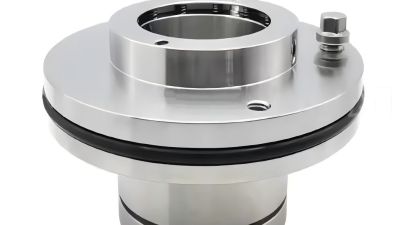
The JCS1C-43/53-QREO mechanical seal is designed to support reliable pump performance in paper mill applications. Its cartridge-type construction allows for faster installation and easier maintenance, helping reduce service time and improve equipment availability. The balanced design accommodates pressure fluctuations effectively, making the seal suitable for demanding operating conditions found throughout pulp and paper production.
Built for durability, the sealing faces can be manufactured with silicon carbide to provide strong resistance against wear and friction. Corrosion-resistant metal components and carefully selected elastomers further enhance service life when the seal is exposed to moisture, chemicals, and challenging process environments. This material combination helps maintain stable sealing performance during continuous operation.
Suitable for handling pulp and other process media, the seal helps minimize leakage and protect pump efficiency. Its robust configuration supports smooth operation in circulation, processing, and transfer systems, providing a practical solution for paper mills seeking dependable sealing performance and simplified maintenance.
A single-spring seal often suits simple pumps with modest pressure and limited installation variation. Keep conditions gentle. It still needs clean faces and correct alignment.
Multi-spring seals spread loading more evenly across the sealing faces. Balanced seals reduce face loading during higher pressure differences. Their benefits disappear when shaft movement or vibration remains excessive.
Unbalanced seals work well in lower-pressure duties. They may experience higher face loading as pressure increases. Check pressure, speed, temperature, and startup conditions before choosing one.
Elastomer bellows seals suit clean fluids and have fewer sliding parts. Confirm chemical resistance, temperature limits, and cleanliness requirements. A compatible fluid is not guaranteed.
Metal bellows seals handle heat, vacuum cycling, and aggressive process conditions. Verify metal compatibility with the pumped medium. Thermal stress still deserves attention.
Compare actual leak rate at operating temperature, not only catalogue ratings. Record vacuum pressure over time. A cold bench test can mislead. Shaft and housing expansion may change the result.
Inspect faces under bright, angled light. A tiny scratch can form a visible leak path. Check shaft runout, sleeve condition, housing dimensions, and axial movement. Clean surfaces with a lint-free cloth and approved solvent.
Install O-rings without twisting, cutting, or stretching them. Use guide sleeves over threads and keyways. Tighten fasteners gradually in a cross pattern. A calibrated torque wrench helps. Remove setting clips before starting the pump.
Poor flushing, dry running, vibration, or misalignment can destroy a new seal. Air may enter through gaskets, threads, or porous parts. I once underestimated startup dryness. The faces overheated within minutes. Realistic testing is safer than assumptions.
Vacuum Mechanical Seals are essential components in industrial pumps, helping prevent air ingress, fluid leakage, and loss of pumping efficiency under vacuum conditions. Their performance depends on the interaction of precision sealing faces, secondary sealing elements, springs, and supporting hardware. This article explains how these seals operate and examines seven practical seal types, including single, double, cartridge, balanced, unbalanced, elastomer-based, and metal-bellows designs. It also discusses how material choices such as carbon, ceramic, silicon carbide, and corrosion-resistant metals affect compatibility, durability, temperature resistance, and pressure limits.
Selecting the right seal requires careful evaluation of the pump design, fluid properties, vacuum level, speed, temperature, pressure, and operating cycle. The article also outlines installation practices that improve reliability, such as inspecting shaft surfaces, maintaining alignment, preventing contamination, and following correct compression and tightening procedures. Finally, it presents maintenance and troubleshooting guidance for identifying leakage, overheating, wear, vibration, and premature failure, helping operators improve service life and maintain stable pump performance.