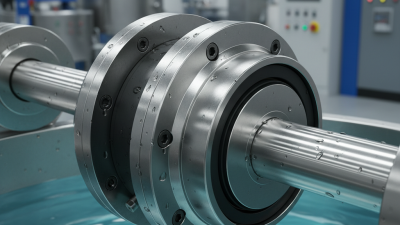
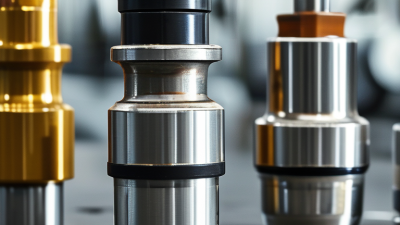
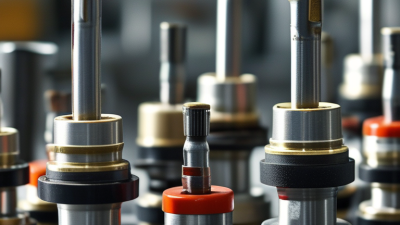
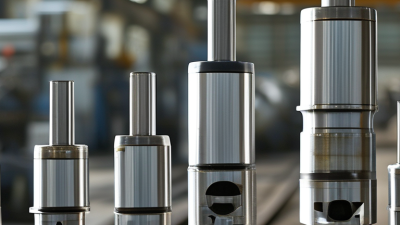
When it comes to mixing stuff where pressure, heat, chemicals, or rough solids are involved, Agitator Seals are the real MVPs. Inside a reactor, a seal might have to handle sticky resins, dry powders, or even churning liquids — all at once. Even a tiny leak can spoil a batch, damage the bearings, or mess up production pretty badly.
Industry stats really highlight why picking the right seal isn't something to skimp on. According to Grand View Research, the global market for mechanical seals is expanding steadily, thanks largely to industries like chemicals, pharma, food processing, and energy. MarketsandMarkets also points out that folks care a lot about process reliability and reducing leaks. These reports give good direction, no doubt. But, at the end of the day, they don’t replace the need for testing your equipment under real-life conditions.
Dr. Robert J. Flitney, a well-known sealing engineer and author of the Seals and Sealing Handbook, always reminds us, ‘The seal should be chosen as part of the entire machine system.’ That’s still pretty solid advice. For example, a cartridge seal might help cut down on installation errors. A split seal makes maintenance easier around big shafts. Or, if you’re dealing with something really dangerous or abrasive, a double seal provides extra protection. But, of course, the ‘best’ choice really depends on factors like shaft speed, pressure, temperature, how the fluid acts, and what kind of barrier system you’ve got.
One thing that’s often overlooked: real-world experience. A seal that works great with clean water might give out quickly if it's handling a crystallizing slurry. Surface finish can make a big difference. And don’t forget about flushing — sometimes, good maintenance habits save the day.
There’s no one-size-fits-all answer here. Finding the right Agitator Seal means balancing how long it lasts, how easy it is to clean, maintenance needs, and overall costs. Plus, some market reports lump different types of seals together, which can make comparisons tricky. Before you make a purchase decision, it’s worth paying attention to these nuances to find what really fits your specific situation.
Define an Agitator Seal: Shaft Sealing Under Pressure, Vacuum, and Mixing Loads
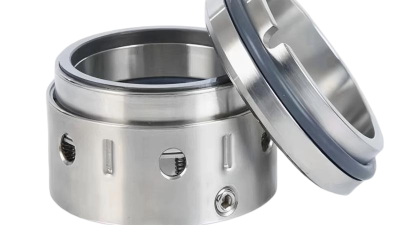
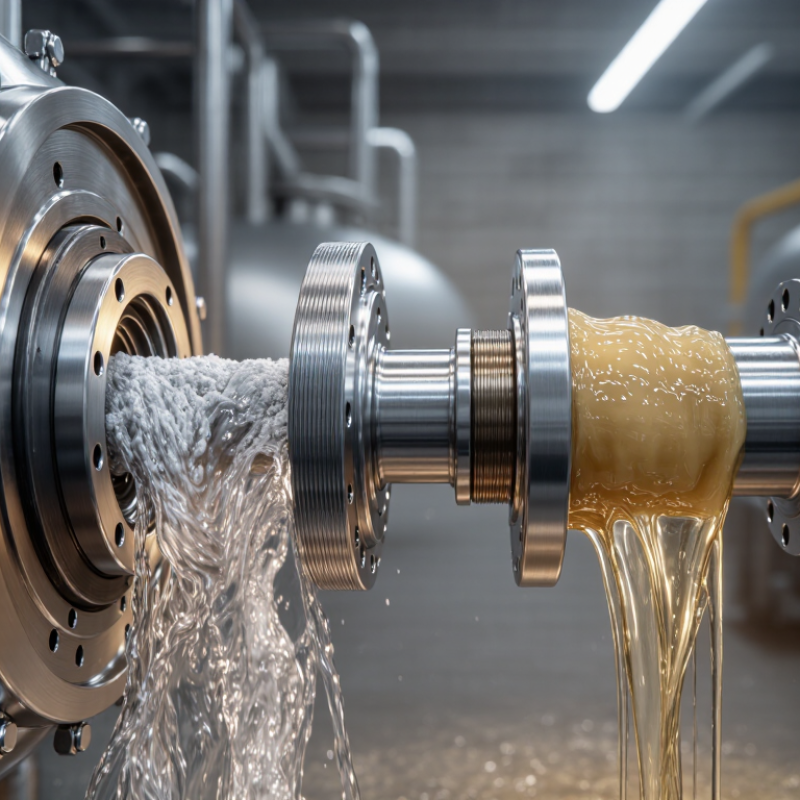
An agitator seal is a shaft-sealing device fitted where a mixer shaft enters a vessel. It prevents liquid, vapor, dust, and gas from escaping around the rotating shaft. Unlike a simple pump seal, it must handle movement, pressure changes, vacuum, and strong mixing forces. The sealing faces work like two polished rings pressed together. A thin fluid film reduces friction and heat.
Pressure and vacuum create different risks. Internal pressure can force process liquid through weak points, while vacuum may pull air, moisture, or cleaning chemicals inward. Shaft runout makes the problem harder. The seal must also tolerate vibration, temperature changes, and abrasive particles. In practical service, a small alignment error can cause leakage within weeks. That detail is easy to underestimate.
Mechanical seals suit many demanding vessels because they control leakage with precise faces and springs. Cartridge designs can simplify installation and reduce assembly mistakes. Lip seals may work for low-pressure, less aggressive duties, but they are not universal solutions. A gas-lubricated arrangement can protect sensitive products, although it requires clean, stable supply conditions. When evaluating a China Top Agitator Seals Factory, ask for pressure, vacuum, speed, temperature, and shaft-runout limits. Material compatibility matters too. Stainless steel alone is not enough. Elastomers can swell, harden, or crack when exposed to the wrong solvent. Selection should follow actual operating data, not only the vessel drawing. Sometimes the specification is incomplete, and that should be admitted before choosing a seal.
Map Agitator Seal Designs to DIN 28138-2 and ISO 21049 Requirements
What Is an Agitator Seal and Which Type Is Best?
An agitator seal prevents product escape where a rotating shaft enters the vessel. Its best design depends on pressure, temperature, speed, solids, and cleaning cycles. A single seal may suit a low-risk, clean liquid. A double cartridge seal offers stronger containment for toxic, abrasive, or oxygen-sensitive service. Tandem arrangements can provide backup, but they add piping, monitoring, and failure points.
DIN 28138-2 should guide agitator-specific dimensions, shaft interfaces, and installation conditions. ISO 21049 provides broader principles for mechanical seal selection, auxiliary systems, materials, and testing. It was written mainly for pumps, not every agitator. That distinction matters. Treating ISO 21049 as a complete agitator specification can produce a neat, but misleading, compliance file. Map the seal chamber, mounting envelope, face arrangement, and support system against both documents. Record every deviation.
Field experience shows that flush pressure, dry running, and shaft movement often damage seals before normal wear does. The U.S. Department of Energy reports that pumping systems can consume 25–50% of industrial facility electricity, while system improvements may reduce consumption by 20–50% (Improving Pumping System Performance: A Sourcebook for Industry). Seal losses are smaller, yet leakage can trigger cleaning, downtime, and product loss. Monitor barrier pressure, temperature, and leakage trends. Small details matter. A standard match is not a process match.
What Is an Agitator Seal and Which Type Is Best?
Typical agitator seal arrangements mapped to the functional considerations addressed by DIN 28138-2 and ISO 21049. The values represent common configuration elements, not certification or guaranteed compliance.
A single seal normally has one primary sealing interface and no dedicated barrier or buffer circuit. Double and tandem arrangements add a second sealing interface and can use a controlled barrier or buffer fluid system, making them more suitable where leakage control and process isolation are critical. Final selection should verify pressure, temperature, speed, face materials, elastomers, lubrication, and auxiliary-system requirements against the applicable edition of DIN 28138-2 and ISO 21049.
Compare Packed, Lip, Single, and Double Mechanical Seals by Leakage Risk
What Is an Agitator Seal and Which Type Is Best?
An agitator seal controls leakage around a rotating shaft in tanks and process vessels. The right design depends on pressure, speed, temperature, and fluid behavior. Packed seals use compressed rings and remain simple to adjust. However, they normally allow visible leakage and can mark the shaft over time. Lip seals are compact and economical, but their leakage risk rises with shaft movement, heat, or abrasive particles.
Single mechanical seals usually provide cleaner operation than packing or lip designs. Their faces must stay aligned and lubricated. A dry-running event can quickly create heat and damage. Double mechanical seals add a barrier fluid between two sealing faces. They offer the lowest leakage risk for toxic, volatile, abrasive, or highly valuable fluids. They also require more equipment, monitoring, and maintenance skill. More protection means more parts.
Tips: Check the actual fluid, not only its name. Record temperature, pressure, shaft speed, and solids content. Ask a China Top Agitator Seals Supplier for face-material and elastomer recommendations based on operating data. Inspect shaft runout before installation. A perfect seal cannot correct a bent shaft. In field service, I have seen packing succeed in basic mixing duties while an over-specified seal created needless maintenance. That experience still needs careful review, because process conditions change. A single seal may suit clean water, while a double seal can be safer for solvent-based or abrasive mixtures.
Match Seal Materials to Typical Limits: PTFE 260°C, EPDM 150°C, and FKM 200°C
An agitator seal prevents process liquid from escaping where a rotating shaft enters a mixing vessel. It also keeps air, dust, and moisture away from the product. In real installations, seal failure often starts with heat, dry running, or shaft vibration. I have seen a seal look intact while its elastomer had already hardened inside the housing.
Material selection must match the actual operating limits. PTFE can typically tolerate temperatures up to 260°C, making it suitable for severe heat and many aggressive chemicals. It may still creep under pressure, so correct energizing is important.
EPDM
Commonly handles temperatures up to 150°C and performs well with water, steam, and selected cleaning solutions. It is not suitable for every oil-based process.
FKM
Usually reaches about 200°C and offers strong resistance to oils and many fuels.
These figures are typical limits, not automatic guarantees.
A China Best Agitator Seals Factory should verify temperature, pressure, speed, fluid chemistry, and cleaning cycles before recommending a seal. Ask for test data, material certificates, and dimensional checks. Small details matter. A 10°C mistake can shorten service life when heat stays near the shaft. I would also inspect the shaft finish and alignment, because even the best material cannot correct poor installation. My earlier assumption was that higher temperature always required PTFE; experience proved that chemical compatibility and elasticity can matter more.
Evaluate Pressure, Speed, Solids, Temperature, and CIP/SIP Compatibility
An agitator seal is a dynamic barrier around the rotating shaft. The best type depends on process evidence, not catalog preference. A single mechanical seal suits moderate pressure and non-hazardous liquids. A double seal offers stronger containment, especially during vacuum cycles, toxic service, or sterile processing. Cartridge designs can reduce installation errors, although they are not automatically easier to validate.
Pressure and speed come first. Check maximum operating pressure, pressure spikes, shaft runout, and start-stop frequency. A seal rated for 10 bar may fail when pressure reverses during cleaning. Speed also changes heat generation and face wear. Calculate sliding velocity instead of relying only on revolutions per minute. Solids create another problem. Abrasive crystals can score faces, while fibrous solids can hang on the shaft. Flush plans, hard face materials, and a protected balance design become important. I have seen “solids-compatible” seals fail because the cleaning fluid carried unexpected particles.
Temperature affects elastomers, springs, and face distortion. Confirm continuous temperature, thermal shock, and expansion during SIP. The CDC sterilization guidance identifies 121°C saturated steam as a reference condition, but it is not a universal SIP recipe. For hygienic systems, EHEDG Document 8 emphasizes drainability and cleanability. Many validation programs also examine CIP flow near 1.5 m/s, though vessel geometry can change the result. ASME BPE 2024 remains a useful reference for hygienic equipment details. The difficult part is often overlooked: proving cleaning at the seal chamber, not only inside the vessel.
Select the Best Agitator Seal Using Reliability, Maintenance, and Total Cost Data
An agitator seal prevents process fluid from escaping where a mixing shaft passes through a vessel wall. It also blocks air, moisture, and contamination from entering the batch. The right Agitator Mechanical Seal depends on operating evidence, not a catalog description.
Start with reliability data. Record shaft speed, vessel pressure, temperature, fluid viscosity, solids content, and cleaning cycles. A single seal may suit a low-risk liquid process with stable conditions. A double seal offers stronger containment for abrasive slurries, toxic materials, or frequent thermal changes. However, it requires a dependable barrier-fluid system and more instruments. More protection can also create more failure points.
Maintenance records reveal practical differences. Track leakage, adjustment frequency, seal-face wear, downtime, and technician hours. A seal that costs less initially may demand weekly attention. That assumption fails. Calculate total cost using replacement parts, labor, lost production, barrier fluid, and disposal requirements. Small leaks matter. They can stain floors, damage nearby equipment, and signal face distortion before failure.
Fit the selection to the actual process. Inspect shaft runout, bearing condition, mounting alignment, and vessel geometry before installation. Even an excellent seal performs poorly on a misaligned shaft. I would also question incomplete data, because operators sometimes report “normal” conditions while batches briefly surge in pressure. A short trial with measured leakage and vibration can expose that gap before a full installation.
China 58U/59U Chemical Pump Mechanical Seals: Fluororubber and Silicon Carbide for Reliable Factory Performance
Chemical process pumps often operate under severe conditions, where corrosive liquids, suspended particles, and pressure fluctuations can accelerate seal failure. The NACE IMPACT study estimated that corrosion costs the global economy approximately US$2.5 trillion annually, highlighting the importance of durable materials and preventive maintenance in process equipment. For this reason, 58U/59U mechanical seals are designed for demanding chemical applications requiring dependable containment and extended service life.
Manufactured in China, these seals use silicon carbide and hard-alloy friction pairs to provide strong resistance to abrasion, corrosion, and thermal stress. Durable fluororubber secondary seals support compatibility with many chemical media while maintaining flexibility during temperature and pressure changes. The balanced seal structure reduces face loading, helping maintain stable operation in high-pressure systems and minimizing the risk of leakage when particulate-laden fluids are present.
The U.S. Department of Energy reports that pumping systems can represent 25% to 50% of the electricity used in some industrial facilities, making reliable pump operation essential to controlling operating costs. By reducing unplanned shutdowns, product loss, and frequent seal replacement, 58U/59U seals can help chemical-processing facilities improve equipment availability. Their combination of silicon carbide, hard alloy, and fluororubber makes them a practical sealing solution for process pumps handling aggressive and abrasive media.
FAQS
It controls leakage where a rotating shaft enters a tank. It also blocks dust, air, and moisture. Small gaps matter.
Packed seals usually allow visible leakage by design. Lip seals may leak more with heat, shaft movement, or abrasive particles. Shaft wear can worsen the problem.
A single seal often suits clean water and other stable, clean fluids. Its faces need proper alignment and lubrication. Dry running can create damaging heat quickly.
A double seal adds barrier fluid between two sealing faces. It offers lower leakage risk for volatile, abrasive, or valuable fluids. More protection means more parts.
Record temperature, pressure, shaft speed, fluid chemistry, and solids content. Include cleaning cycles and actual operating changes. The fluid name alone is not enough.
PTFE commonly reaches about 260°C, EPDM about 150°C, and FKM about 200°C. These are typical limits, not guarantees. Compatibility still matters.
No. PTFE may resist heat but can creep under pressure. EPDM suits water and steam but may fail with some oils. My earlier assumption was too simple.
Check shaft runout, surface finish, alignment, and vibration before installation. A bent shaft can damage even a well-designed seal. Small errors become expensive.
Conclusion
Agitator Seals are designed to prevent leakage while sealing a rotating shaft exposed to pressure, vacuum, mixing forces, temperature changes, and potentially abrasive solids. Their design should be evaluated against relevant DIN 28138-2 and ISO 21049 requirements, while considering the vessel configuration, shaft speed, operating pressure, and cleaning method. Packed seals are simple and economical but may allow more leakage, whereas lip seals suit lighter-duty applications. Single mechanical seals provide improved control, while double mechanical seals offer the strongest protection when leakage risk, contamination, or hazardous process conditions are major concerns.
Material selection is equally important. PTFE may be suitable up to approximately 260°C, EPDM up to 150°C, and FKM up to 200°C, depending on chemical exposure and actual operating conditions. The best agitator seal balances reliability, maintenance needs, CIP/SIP compatibility, service life, and total cost. A careful comparison of pressure, speed, solids content, temperature, and cleaning requirements helps determine whether a simpler seal is sufficient or a more robust arrangement will deliver better long-term performance.