Welcome to Jiashan County Hardware and Machinery Industry Zone


Choosing a Rubber Bellows Seal supplier isn't just about comparing prices. The real key is finding a design that fits your specific needs—consider things like your shaft size, how fast everything's running, pressure levels, temperatures, and the type of fluid you're working with. What works great in a clean-water pump might totally fail if you're dealing with abrasive materials or rapid temperature swings. And honestly, those little details really matter.
In this guide, I’ve put together a list of ten manufacturers around the globe to help buyers get a sense of who’s out there. It also covers some important points to check before you ask for a quote. Think about their product range, the materials they offer, support for different sizes, quality documentation, customization options, and whether they can provide technical help. Don’t forget to ask about lead times, packaging, and if they can give you drawings or test reports specific to your application. Basically, when you compare, make sure you’re looking at apples to apples.
While a company's website can give you a quick idea of what they can do, just because they have a product page doesn’t mean it’s suitable for your particular situation. It’s a good idea to request details like operating limits and installation instructions and then double-check if they match your equipment and conditions. If possible, chat with a qualified engineer or the manufacturer’s tech team—this can save you from a bunch of headaches like leaks, fitting issues, or early wear and tear. Yeah, it takes some time, but it’s totally worth it.
Keep in mind, the manufacturers featured here serve different markets and might focus on different types of products, support, or sourcing. This list should be a starting point—not the final say. Some things might change over time, and just because a brand is familiar doesn’t mean it’s the perfect fit for your needs. So, do your homework and compare carefully—it’s all about finding what really works for you.
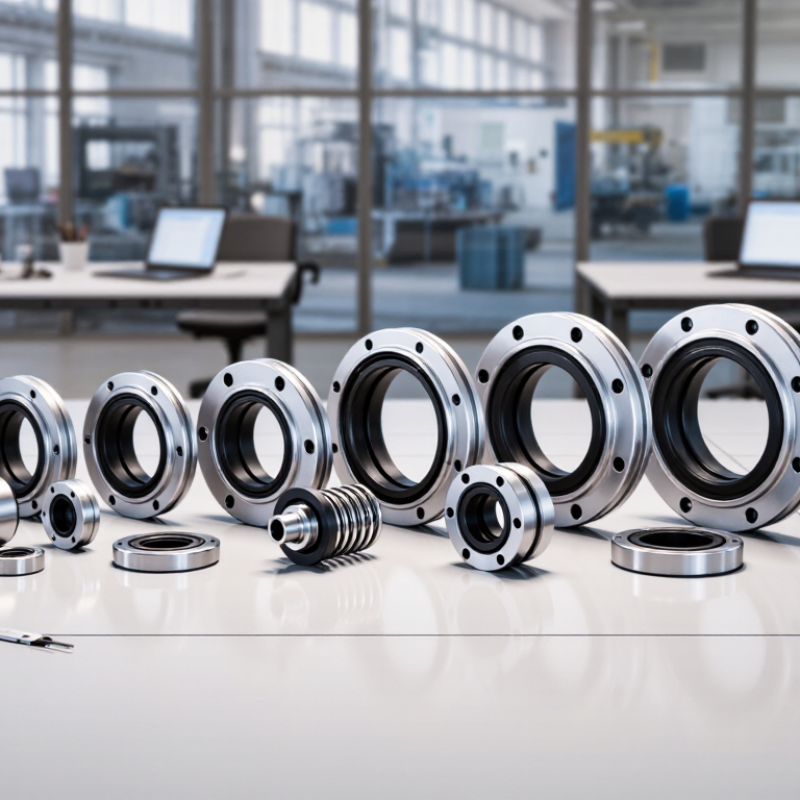
Rubber bellows seals combine a flexible elastomer section with sealing faces that stay pressed together during operation. The bellows flexes as the shaft moves slightly, helping maintain face contact without relying on a sliding secondary seal along the shaft. Small movements matter. Convolution shape, wall thickness, and installed compression all affect how freely the bellows moves and how evenly the faces meet.
Material selection depends on the fluid, temperature, and operating conditions. Nitrile rubber is often considered for oils, while EPDM may suit many water-based applications; fluorocarbon rubber can handle some demanding fluids and higher temperatures. These are starting points, not guarantees. Compatibility charts and actual service data should guide selection. A seal that performs well in a clean test may behave differently with abrasive particles or repeated temperature changes.
During operation, the rotating and stationary faces form the primary sealing interface, while the bellows provides flexibility and a secondary barrier. Excessive compression can distort the bellows; too little may reduce face contact. Check shaft dimensions, pressure, speed, and dry-running risk before choosing a design. Temperature ratings alone can mislead. I have seen specifications overlook brief start-up conditions, which are easy to dismiss but worth reviewing.
Rubber bellows seals serve pumps, compressors, vehicle systems, and water-treatment equipment. Their flexible folds accommodate movement and help keep dust, moisture, and process fluids away from sensitive components. In wastewater plants, they may protect rotating shafts exposed to splash, grit, and frequent washdowns. The UN World Water Development Report 2024 estimates that 2.2 billion people lacked safely managed drinking water in 2022, underscoring the ongoing need for reliable water infrastructure. That figure does not measure seal demand, but it shows the scale of systems that depend on dependable components.
Automotive applications include vibration-prone assemblies and fluid-handling systems, where temperature, motion, and chemical exposure affect seal life. The International Energy Agency’s Global EV Outlook 2024 reports that electric-car sales approached 14 million worldwide in 2023. Electrification changes component layouts; it does not remove the need for sealing. A rubber bellows seal may suit flexible, lower-load duties, while a Metal Bellows Seal can be considered when temperature or chemical conditions exceed the rubber grade’s limits. Selection still depends on the actual medium and operating cycle. A catalog match is not enough.
Tips: Check the fluid, temperature range, shaft movement, and installation space before specifying a seal. Ask for compatibility data for the exact rubber compound. Then verify it under real operating conditions; this step is easy to overlook. Seal performance can vary with misalignment and cleaning routines, and the first specification may need revision.
When evaluating rubber bellows seal manufacturers, begin with the operating conditions, not the catalog. Share the fluid type, temperature range, pressure, shaft movement, and available installation space. A capable supplier should ask for these details before recommending a material or profile. Details matter. A bellows exposed to hot oil may need a different elastomer than one handling water or cleaning chemicals. Ask how the proposed compound was selected, and request relevant test data where available.
Review manufacturing controls as carefully as product specifications. Look for documented inspection steps, batch identification, and clear acceptance criteria for dimensions and visible defects. Ask whether the manufacturer can provide drawings, tolerances, and sample seals for fit checks. Not always. A sample that fits on a bench may behave differently under heat, vibration, or repeated movement. Clarify what testing was performed and under which conditions. Reliable communication also counts: technical questions should receive specific answers, while lead times and customization limits should be stated plainly. If claims sound broad, ask for evidence. Even a thorough checklist cannot predict every field condition, so record assumptions and revisit them after installation.
For global buyers, sourcing a rubber bellows seal starts with the operating conditions, not the catalog photo. Share the shaft diameter, fluid, temperature range, pressure, and expected rotation speed with potential manufacturers. A Bellows Mechanical Seal can look correct yet fail if its rubber compound swells in the process fluid. Ask suppliers to identify the proposed elastomer and explain its compatibility basis. Request dimensional drawings and confirm installation space, including the available axial movement. Small differences matter.
Tips: Send a sample or clear measurements, plus photos of the equipment. Ask for inspection records, material traceability, and a written lead time. Confirm how replacement parts will be packaged and labeled. Keep answers on file.
Compare manufacturers on more than unit price. Check whether they can produce consistent dimensions across repeat orders and explain their inspection process. A practical supplier should discuss limitations, not just promise a fit. Request a pre-production sample when the application is critical, then check dimensions and fit under realistic installation conditions. Shipping estimates can also shift; clarify production time separately from transit time. One point is easy to overlook: a technically suitable seal may still be difficult to source again if drawings, compound details, or revision records are incomplete. Tell the manufacturer how often you expect to reorder.
Global buyers comparing rubber bellows seal manufacturers should look beyond catalog dimensions. A seal may fit a pump shaft yet fail when temperature, pressure, or fluid exposure changes. Ask for material specifications, operating limits, and inspection records. Clear answers matter. Small details matter.
Check how each manufacturer controls bellows molding, bonding, and final inspection. Request samples or test data relevant to your application, not only general certificates. A Ptfe Bellows Mechanical Seal is a different design choice from a rubber bellows seal, so confirm that the quoted product matches the equipment and process. Compare lead times, packaging, and support for custom sizes. These details can affect installation and replacement planning. A polished datasheet still cannot predict every field condition; I would treat it as a starting point, not proof of service life. Share actual fluid, temperature, and shaft details before requesting a quotation, even if some operating figures are estimates.
When comparing rubber bellows seal manufacturers, look beyond a polished catalogue. Ask how they control elastomer mixing, molding, and final dimensions. Reliable suppliers can explain material grades and provide inspection records linked to a production batch. Details matter. For Elastomer Bellows Seals, check whether test conditions reflect your actual fluid, temperature range, pressure, and movement. A seal that performs well in a simple bench test may behave differently after repeated compression or exposure to cleaning agents.
Customization should solve a defined problem, not just change a drawing. Share shaft dimensions, available installation space, expected motion, and likely contaminants. Then ask what the proposed material and geometry are intended to improve. A capable manufacturer will flag trade-offs, such as flexibility versus wear resistance, rather than promise a perfect fit. Request a sample or dimensional review before approving a large order. This step takes time, but skipping it can cost more.
Support matters after delivery, too. Compare response times, technical documentation, packaging practices, and access to someone who understands seal applications. Ask how the supplier investigates early failures and whether they can review photos, operating data, or a returned part. Specific answers are useful. Vague assurances are not. One imperfect point: published tolerances may not describe every feature equally well, so confirm critical dimensions in writing before production.
A practical buyer-defined weighting example for comparing quality, customization, and support. These percentages are suggested evaluation weights, not survey results or ratings of specific manufacturers.
How to use it: Ask each supplier for documented material and inspection controls, evidence of relevant testing, design and tooling capabilities, and clear response and after-sales processes. Adjust the weights to fit your application.
Pulp and paper production depends on large volumes of process water, making wastewater control and pump reliability important to both operating costs and environmental performance. The 2017 World Water Development Report, *Wastewater: The Untapped Resource*, estimates that more than 80% of wastewater worldwide is discharged without treatment. In pulp-mill service, dependable sealing helps limit leakage, protect pump performance, and support consistent wastewater handling—especially where harsh operating conditions can accelerate wear and increase maintenance demands.
A double-ended, balanced mechanical seal designed for demanding duty can provide a practical upgrade for pump units in mill environments. Its integrated construction supports straightforward installation and servicing, while reliable sealing can help reduce unplanned downtime, maintenance frequency, and associated costs. For facilities evaluating seal options from Chinese suppliers, the key considerations are proven compatibility with the pump and process, durability under site conditions, and support for environmental performance requirements. These factors make robust sealing technology a useful part of a broader wastewater-management strategy.
Its flexible section follows small shaft movements while keeping the sealing faces pressed together. Small movements matter.
The rotating and stationary faces create the main sealing interface. The bellows adds flexibility and a secondary barrier.
Consider the fluid, temperature, pressure, and operating conditions. Nitrile may suit oils, while EPDM may suit many water-based uses. These are starting points, not guarantees.
No. Brief start-up conditions and repeated temperature changes can affect performance. Review actual service data, too.
Share shaft dimensions, fluid, temperature range, pressure, speed, available space, and expected movement. Mention likely contaminants if known.
Ask about material grades, molding controls, inspection records, and batch traceability. A polished datasheet is not proof of field performance.
Not always. Customization should address a defined problem. Ask what a proposed material or shape is meant to improve.
Review critical dimensions in writing, request a sample or dimensional check, and confirm packaging and lead times. I would still verify the fit before a large order.
This guide explains how a Rubber Bellows Seal works, how its design accommodates movement and helps contain fluids, and how material selection affects durability, chemical compatibility, and performance. It also reviews the industries and equipment that commonly use these seals, helping buyers understand how operating conditions such as temperature, pressure, and motion influence product requirements.
For global buyers, the guide outlines practical ways to evaluate manufacturers, including quality controls, engineering expertise, customization options, production capacity, communication, and after-sales support. It also highlights sourcing considerations such as lead times, shipping, documentation, and consistency between samples and production orders. A structured comparison of manufacturers can help buyers identify a dependable supplier whose products and services match their application needs.