Welcome to Jiashan County Hardware and Machinery Industry Zone


Leave Your Message
0%

Picking the right Flange Bronze Bushing isn't just about grabbing any material off the shelf; it’s actually a pretty practical engineering decision. Think about it—these bushings have to withstand loads, sliding speeds, lubrication issues, misalignments, and contamination. Even a tiny mismatch can lead to scoring, excess heat, squeaky noises, or early wear on the shaft. It’s a delicate balancing act.

And the industry data really supports this careful approach. For instance, the U.S. Geological Survey reported that global copper mining hit about 22 million metric tons in 2023, which just shows how vital copper still is in all kinds of industrial parts. Companies like Grand View Research also point out that transportation, construction, and industrial machinery are huge markets for bronze and copper alloys. But, keep in mind—just because the numbers look good doesn’t guarantee every bronze bushing will perform perfectly. They just highlight the widespread use and importance of these materials.

Tribology expert Ernest Rabinowicz once said, “Friction is not a property of a material, but a property of a system.” That’s pretty eye-opening, right? It means when you're picking a Flange Bronze Bushing, you need to consider the whole system—what alloy you’re using, the hardness of the shaft, how smooth the surface finish is, the lubrication, and how everything fits together. Standards like ASTM B22, ASTM B584, and the info from manufacturers can help you check the alloy’s composition and mechanical qualities. But honestly, no matter how much data you have, real-world experience is irreplaceable.

Always look at the actual working conditions. For example, a C93200 bronze bushing might be just fine for moderate loads and well-lubricated movement. But if you’re dealing with poor grease access, a self-lubricating type might actually be better. That said, choosing the right bushing can still go wrong if the shaft’s soft, misaligned, or filled with abrasive dust. So, when you’re selecting a flange bushing, you gotta consider loads, clearances, temperature limits, lubrication needs, how easy it is to install, and how well it’s been maintained—not just the price or the alloy brand. It’s all about the whole picture.
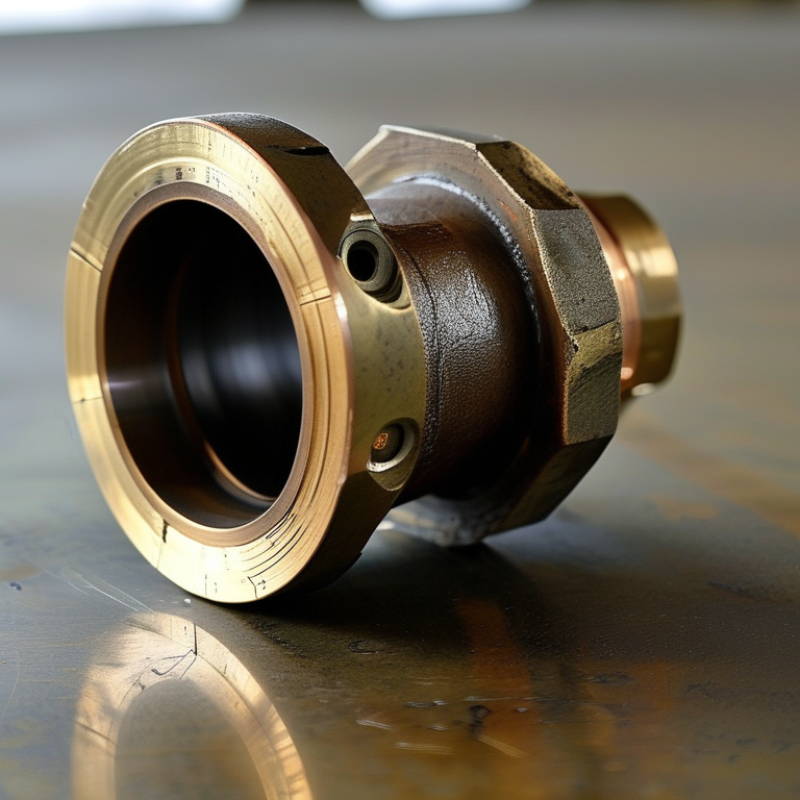
How to Choose the Right Flange Bronze Bushing?

Define the Operating Conditions for the Bronze Bushing

How to Choose the Right Flange Bronze Bushing?

Define the Operating Conditions for the Bronze Bushing

Start with the real working conditions, not a catalogue label. Record the radial load, shaft speed, temperature, and motion type. Continuous rotation differs from short oscillating movement. A slow pivot may still create high edge pressure. Check whether the flange carries axial positioning loads. Measure the shaft diameter and housing bore accurately. Even small clearance errors can cause heat, noise, or early wear. Dust, water, and chemical exposure also influence the bronze grade and lubrication method. Field measurements are often more useful than assumptions.

Tips: Keep a simple inspection record. Note temperature after several operating hours. Check the shaft surface for scoring. Verify the supplier’s load and PV ratings. Do not ignore start-up conditions. A bushing can fail during acceleration, even when normal running appears safe.

Choose the material after defining these conditions. Oil-impregnated bronze may suit clean, steady movement with limited maintenance. Solid-lubricated bronze can be more suitable where regular greasing is difficult. However, contamination can still damage the shaft and bushing. A guarded housing may improve reliability. Review the fit after installation, because pressing the bushing can reduce its internal clearance. A perfect calculation is not always enough. Real alignment may be imperfect.

Also, avoid confusing unrelated search terms, such as “Flange Insert Breast Pump,” with industrial bearing components. Confirm the part’s dimensions, material certificate, and application data before purchase. Recheck the design when loads, temperatures, or lubrication practices change.

Match the Bushing Material to the Application

Choosing a flange bronze bushing starts with the working environment, not the catalog size. Bronze performs well where moderate loads, repeated movement, and dimensional stability matter. However, different bronze materials suit different conditions. A tin bronze grade can handle steady loads and resist wear in many industrial pivots. An aluminum bronze grade may be stronger for heavy impact or higher shaft pressure. The choice is not automatic.

Check the load, speed, temperature, and lubrication method together. A slow conveyor pivot with regular grease needs a different bushing from a fast linkage exposed to dust. In dirty areas, a self-lubricating or graphite-plugged bronze bushing can reduce maintenance. It may still fail if abrasive particles enter through a poorly protected flange. Small details matter. Inspect the shaft surface, too. A rough shaft can score the bushing quickly, even when the bronze grade is suitable.

Corrosion also changes the decision. Near water or chemicals, confirm the bronze alloy’s resistance before installation. Measure the housing and shaft instead of trusting old drawings. Real machines often differ slightly.

Allow proper running clearance for heat expansion, but avoid excessive clearance that creates noise and edge loading. A flange bushing must seat flat against the housing shoulder. If it tilts, the flange can carry uneven pressure and wear early.

Testing one sample under actual load is often wiser than relying on assumptions. Review wear marks after operation. They reveal problems calculations may miss. A material choice can look correct on paper and still need adjustment.

Select the Correct Flange and Bearing Dimensions

How to Choose the Right Flange Bronze Bushing?

Select the Correct Flange and Bearing Dimensions

Choosing a Bronze Bushing starts with the flange, not only the shaft diameter. Measure the shaft at several points with a micrometer. A worn shaft can look round but vary near the seal area. Record the housing bore, shaft diameter, bushing length, flange thickness, and available clearance. ISO 4379 covers plain bearing dimensions and recommends controlling both bore size and wall thickness. These details affect load distribution and alignment.

For a rotating shaft, calculate projected bearing area: shaft diameter multiplied by bearing length. Compare the resulting load with the bronze grade’s published pressure and speed limits. ASTM B505/B505M provides requirements for continuously cast bronze alloys, including mechanical properties and dimensional quality. Do not copy a catalog clearance blindly. Temperature, oil viscosity, contamination, and shaft speed can change the working fit. A flange that is only 1 mm wider may interfere with a shoulder or seal groove. I have seen this simple mistake delay assembly. It is easy to miss.

Tips: Check the flange outside diameter against the housing pocket. Confirm the bolt circle and oil-hole position. Use ISO 286-1 fit principles when defining bore tolerances. Leave room for thermal expansion. Recheck measurements after pressing the bushing, because the bore may close slightly. When the data conflicts, stop and review the drawing. Assumptions are often the weakest dimension.

Evaluate Load, Speed, Lubrication, and Temperature

How to Choose the Right Flange Bronze Bushing?

Choosing a flange bronze bushing starts with the real load, not the catalog name. Record both radial and axial forces. A conveyor pivot may carry a steady 2,000 N load, while a linkage sees repeated shock. Those conditions need different safety margins. Check the shaft diameter, flange space, and housing fit before ordering. A perfect bushing is useless if the flange cannot seat flat.

Speed changes the decision. A slow hinge may tolerate boundary lubrication, but a fast rotating shaft creates more heat. Note the shaft speed, operating hours, and movement pattern. Short oscillations can be harder than continuous rotation. They may prevent lubricant from spreading evenly. I have seen early wear caused by ignoring this detail.

Lubrication must match the bronze grade and working environment. Oil, grease, dry running, dust, and washdown conditions each demand careful review. A Bronze Bushing Graphite design can help where regular relubrication is difficult, but it still needs correct load and speed limits. Temperature matters too. Measure the housing temperature near the flange, not several inches away. Heat can reduce clearance and change lubricant behavior. Allow for thermal expansion during assembly. Slightly tight today may become seized tomorrow.

Do not rely on one calculation. Compare supplier data with actual operating records, then inspect worn parts when possible. A shallow polish suggests normal bedding; scoring, blue discoloration, or uneven wear deserves investigation. My first estimate is not always right. That is why trial fitting, clearance checks, and a short inspection interval remain practical engineering habits.

Check Installation, Alignment, and Shaft Compatibility

How to Choose the Right Flange Bronze Bushing?

A flange bronze bushing should match the housing, shaft, and operating load. Begin by checking the bore diameter and flange seat with calibrated tools. Remove burrs, dirt, and old metal fragments before installation. Even a small raised edge can distort the bushing during pressing. Use a suitable arbor or installation sleeve. Do not strike the flange directly with a steel hammer. It may crack or deform.

Alignment deserves close attention. The housing bore and shaft centerline must remain consistent through the full movement range. A misaligned shaft can create uneven contact, heat marks, and rapid wear on one side. Check parallelism with a straightedge or dial indicator when possible. The flange should sit flat against its shoulder. If it rocks, stop and inspect the housing. A rushed installation often becomes an expensive correction.

Shaft compatibility involves more than diameter. Confirm the shaft material, surface finish, hardness, rotation speed, and lubrication conditions. A rough shaft can wear bronze quickly, while excessive clearance may cause vibration and impact loading. Measure the shaft at several points, not just once. Temperature also changes running clearance. This detail is easy to overlook. In real maintenance work, specifications can appear correct while the shaft is slightly tapered or bent. Recheck questionable measurements before selecting the final bushing size.

How to Choose the Right Flange Bronze Bushing? — Check Installation, Alignment, and Shaft Compatibility

Selection Dimension What to Check Practical Selection Guidance Potential Problem if Incorrect
Load and Motion Required
Radial load, occasional axial load, rotation or oscillation, and operating speed.
Select a bushing whose allowable load and speed are suitable for the actual duty cycle. For plain bearings, the pressure–velocity (PV) value is commonly used as a screening parameter: PV = projected bearing pressure × sliding velocity. Verify the rating with the material supplier because allowable values vary with lubrication, temperature, and motion. Excessive wear, temperature rise, seizure, deformation, or premature flange failure.
Bushing Material Bronze grade, hardness, strength, corrosion resistance, and compatibility with the lubricant and shaft. Use a bronze grade appropriate for the expected load, speed, and environment. Cast or sintered bronze compositions have different strength, porosity, lubrication, and operating characteristics; do not treat all bronze bushings as interchangeable. Cracking, rapid wear, corrosion, lubricant incompatibility, or loss of dimensional stability.
Shaft Diameter and Fit Finished shaft diameter, shaft tolerance, surface condition, hardness, and actual bushing bore. Match the bushing bore and shaft to the required running clearance after installation. The bushing bore may reduce slightly when pressed into its housing, so final sizing should be based on the installed condition rather than only the free-state bore. Too little clearance can cause binding and overheating; too much clearance can cause impact, vibration, and accelerated wear.
Shaft Surface Surface finish, roundness, straightness, hardness, burrs, grooves, and contamination. Use a smooth, round, burr-free shaft with a finish suitable for plain-bearing service. Remove sharp edges and lead-in damage before assembly. A worn or grooved shaft can quickly damage a new bushing. Scoring, uneven contact, leakage of lubricant, edge loading, and shortened service life.
Housing Bore and Flange Seat Housing bore diameter, roundness, wall thickness, interference fit, shoulder condition, and flange seating surface. Confirm that the housing bore is clean, round, and within the specified tolerance. The flange must seat completely against a square shoulder or controlled face; the housing should provide adequate support around the bushing. Spinning in the housing, flange distortion, axial movement, uneven load distribution, or housing damage.
Installation Method Press-fit procedure, tooling, alignment, lubrication during assembly, and protection of the flange. Use a correctly sized mandrel or installation tool that contacts the bushing's supported area. Apply force along the bushing axis and avoid striking the flange directly. Keep the bore and housing free of chips and abrasive particles. Cocked installation, cracked flanges, distorted bores, damaged surfaces, or excessive press force.
Alignment Coaxiality of mating bores, shaft straightness, parallelism, and angular alignment between the bushing and shaft. Check alignment before final assembly. Where two bushings support one shaft, install or ream them in a setup that preserves a common axis when the design permits. Use alignment tooling rather than forcing the shaft through misaligned bushings. Edge loading, localized heating, flange contact, uneven wear, and high starting torque.
Flange Function Axial load direction, flange thickness, flange outside diameter, adjacent clearance, and mating face condition. Use a flanged bushing only when the flange is needed for axial positioning or limited thrust support. Ensure the flange is not continuously overloaded unless it is specifically rated for thrust service, and provide clearance around the rotating assembly. Flange wear, rubbing against adjacent parts, cracking, axial seizure, or loss of positioning.
Lubrication Grease or oil type, relubrication interval, lubricant grooves or holes, and contamination control. Follow the bushing material specification for lubrication. Apply lubricant to the bearing surface when required, but do not block designed lubrication paths or mix incompatible greases. Oil-impregnated bushings may require different handling from solid lubricated or grease-lubricated types. Dry running, lubricant starvation, swelling, chemical attack, or abrasive paste formation.
Temperature and Environment Operating temperature, moisture, dust, chemicals, corrosion exposure, and washdown conditions. Confirm that both the bronze material and lubricant are suitable for the complete temperature range and environment. Use sealing or shielding where contamination is expected, and account for thermal expansion when setting running clearance. Corrosion, lubricant breakdown, clearance loss, material embrittlement, or accelerated abrasive wear.
Dimensional Verification Bore, outside diameter, flange diameter, flange thickness, length, and installed dimensions. Measure critical dimensions with calibrated instruments before installation and recheck the installed bore when tight tolerances are important. Compare measurements with the engineering drawing and the applicable bearing standard or supplier specification. Incorrect fit, interference with adjacent components, inadequate load area, or assembly rejection.
Post-Installation Inspection Free shaft rotation, starting torque, contact pattern, axial position, noise, temperature, and lubricant condition. Rotate the shaft by hand where possible and confirm smooth movement without tight spots. During initial operation, monitor temperature, noise, vibration, and wear debris; stop the equipment if abnormal heating or binding occurs. Hidden assembly defects can progress into seizure, shaft damage, unplanned downtime, or safety hazards.

Engineering note: Final clearance, load capacity, PV limits, press-fit tolerances, and temperature limits must be taken from the specific bushing material and application requirements. The values should be validated through the relevant drawing, bearing standard, or technical specification before production use.

Compare Service Life, Maintenance, and Total Cost

How to Choose the Right Flange Bronze Bushing?

Service life depends on more than bronze grade. Check the radial load, shaft speed, operating temperature, and alignment before selecting a flange bronze bushing. A High-Density Bronze Bushing may suit heavy loads and intermittent shock, but it still needs correct clearance. A hardened, polished shaft can reduce scoring. Poor alignment can ruin an otherwise excellent installation.

Maintenance requirements also affect real service life. Some bronze bushings require regular grease or oil, while others use internal lubrication features. Confirm the manufacturer’s lubrication limits and inspection intervals. During maintenance, look for dark scoring, looseness, uneven wear, and metal dust near the flange. Small warning signs matter. Ignoring them can turn a simple replacement into shaft repair and production downtime.

Total cost includes more than the purchase price. Calculate installation labor, lubricant use, inspection time, replacement frequency, and the cost of stopped equipment. A cheaper bushing may seem sensible, yet frequent access to a difficult machine can make it expensive. In practical maintenance reviews, the longest-lasting option is not always the best choice either. An oversized or poorly specified bushing can waste money. Compare measured operating conditions with supplier data, then document the decision for future inspections.

How to Choose the Right Flange Bronze Bushing?

Compare service life, maintenance, and total cost under the same moderate-load operating conditions.

Representative engineering estimates for a 10-year application: 2,000 operating hours per year, moderate radial load, correct shaft hardness and finish, and proper installation. Total cost includes the initial bushing price, planned replacement parts, and scheduled lubrication labor; unplanned downtime is excluded. Actual results depend on load, speed, contamination, alignment, temperature, and lubrication quality.

MQ-090 Bronze Wrapped Bushings: A Reliable Choice for Agricultural and Construction Machinery

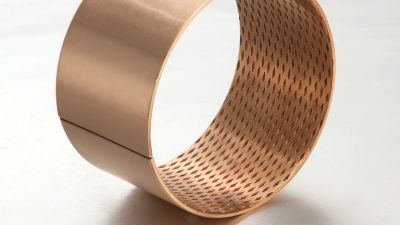
MQ-090 bronze wrapped bushings are a dependable choice for agricultural and construction machinery operating under high loads and low speeds. Made from premium tin bronze alloy, such as CuSn8P or CuSn6.5P, these bushings provide excellent fatigue strength, load capacity, corrosion resistance, and wear resistance. Their robust construction makes them suitable for demanding working conditions in tractors, harvesters, forestry equipment, excavators, loaders, and other heavy-duty machines.

A key feature is the rolled diamond-shaped pocket pattern on the sliding surface. These pockets retain grease or graphite powder and help form a lubrication film quickly when movement begins. This reduces starting friction and running friction, supporting smoother operation and helping limit wear during repeated or intermittent motion. The design is especially useful where maintenance access is limited or lubrication conditions are not always consistent.

The bushing is manufactured in China and produced in accordance with DIN 17662 and ISO 4382-2:1991, with material designation CW453K. For CuSn8, the typical chemical composition includes approximately 91.3% copper, 8.5% tin, and 0.2% lead, while permitted manufacturing variations may apply. With reliable dimensional performance and strong resistance to harsh operating environments, the MQ-090 offers practical support for long-term machinery service.

FAQS

How should the bronze material be selected for a flange bushing?

Match the material to load, speed, temperature, movement, and lubrication. Tin bronze suits steady loads and repeated industrial movement. Aluminum bronze may handle heavier impacts or higher shaft pressure. The choice is not automatic.

Does a high-strength bronze bushing remove the need for correct clearance?

No. Proper clearance remains essential. Too little clearance can cause heat-related binding. Too much clearance may create noise and edge loading. Strength cannot fix poor sizing.

What should be checked before choosing a bushing for dirty equipment?

Check dust, abrasive particles, movement speed, and maintenance access. Self-lubricating or graphite-plugged bronze may reduce grease requirements. However, exposed particles can still damage the bushing. A poorly protected flange remains a weakness.

Why does the shaft surface affect bushing service life?

A rough shaft can score the bronze quickly. Use a hardened, polished shaft when practical. Inspect for grooves, rust, and metal dust. The bronze grade alone is not enough.

How can corrosion conditions change the material decision?

Confirm alloy resistance near water, moisture, or chemicals. Do not rely only on an old maintenance record. Actual exposure may differ from the original design. This is easy to overlook.

How should a flange bushing be installed in its housing?

Measure the real shaft and housing before installation. The flange must sit flat against the housing shoulder. A tilted flange receives uneven pressure and wears early. Small alignment errors matter.

What maintenance signs suggest that a flange bushing needs attention?

Look for dark scoring, looseness, uneven wear, and metal dust. Check the flange edges during scheduled inspections. These signs may reveal alignment or lubrication problems. Ignoring them can damage the shaft.

Is regular lubrication always required for a bronze bushing?

No. Some designs need grease or oil at defined intervals. Others include internal lubrication features. Follow the permitted lubrication limits and inspection schedule. Overlooking this detail can shorten service life.

Should one sample be tested under actual operating conditions?

Often, yes. Test one sample under the real load and movement. Review its wear marks after operation. Those marks can expose problems that calculations miss. The paper choice may still need adjustment.

How should the total cost of a flange bushing be compared?

Include purchase price, installation labor, lubricant, inspections, and replacements. Also estimate costs from stopped equipment and difficult access. A cheaper part may require more frequent maintenance. The longest-lasting option may not be the most economical.

Conclusion

Choosing the right Flange Bronze Bushing begins with a clear understanding of the operating conditions. Consider the type and magnitude of the load, shaft speed, temperature range, exposure to moisture or chemicals, and the available lubrication method. Select a bronze material that matches the application, then confirm the flange shape, inner diameter, outer diameter, length, and tolerance requirements. Proper dimensions help ensure stable support, reduce friction, and prevent premature wear.

Installation factors are equally important. Check shaft hardness, surface finish, alignment, housing fit, and clearance before assembly. A bushing that is correctly aligned and compatible with the shaft will operate more smoothly and reliably. Finally, compare expected service life, maintenance requirements, replacement frequency, and total operating cost rather than focusing only on the initial purchase price. A well-matched Flange Bronze Bushing can provide dependable performance, simplify maintenance, and improve the efficiency of the complete mechanical system.

Aria

Aria

Aria is a dedicated marketing professional with a profound expertise in sealing solutions for industrial applications. With a focus on promoting stable and durable products, Aria plays a crucial role in showcasing how these solutions serve vital sectors including pumps, compressors, reactors,......
Previous 2026 Best Mechanical Seal Assembly Manufacturers?